
The food you don’t remember eating
How impulse takes over and what to do about it

You are cleaning up after dinner. Everyone else is done.
You pick up a piece of crust left on a plate. Then a cold potato. It’s not a meal, so it doesn’t register in your brain. You are just tidying up.
But by the time the pans are washed and the dishwasher is loaded, you’ve eaten a full plate of cold food you didn’t even want. You can’t even remember tasting a single bite.
This is impulse eating. It is eating without a conscious decision. It is the survival system taking the wheel before you even notice what is happening.
Impulse vs Cravings
Last week we looked at cravings. A craving knocks on the door and asks to come in. You usually know it is there before you eat. It is a search for pleasure. You want a specific taste or texture. It is about the food.
Impulse kicks the door down! It is a search for relief.
You don’t necessarily care what the food is; you just want the activity of eating. You usually realize you had an impulse only after you have finished.
Q: How is impulse eating different from binge eating?
It is a difference of intensity.
Impulse eating is usually “grazing.” It is mindless. You eat small things here and there. It is a lack of focus. You often do it while doing something else.
Binge eating is more aggressive. It is eating a large amount in a short time, often until you are physically uncomfortable or in pain.
Impulse ➡ “I didn’t really mean to eat that.”
Binge eating ➡ “I felt completely out of control.”
The Blackout
Impulse eating feels like a brief moment where you stop paying attention.
For a few seconds you stop noticing what you’re doing. You are not thinking. You are just doing. You come back with the realization that you didn’t make a choice.
Impulse eating hits men hard because it clashes with how we see ourselves. We care deeply about being steady and reliable, even in small things.
The shame comes from the loss of control. It is the realization that for five minutes, you were not the one in charge of yourself.
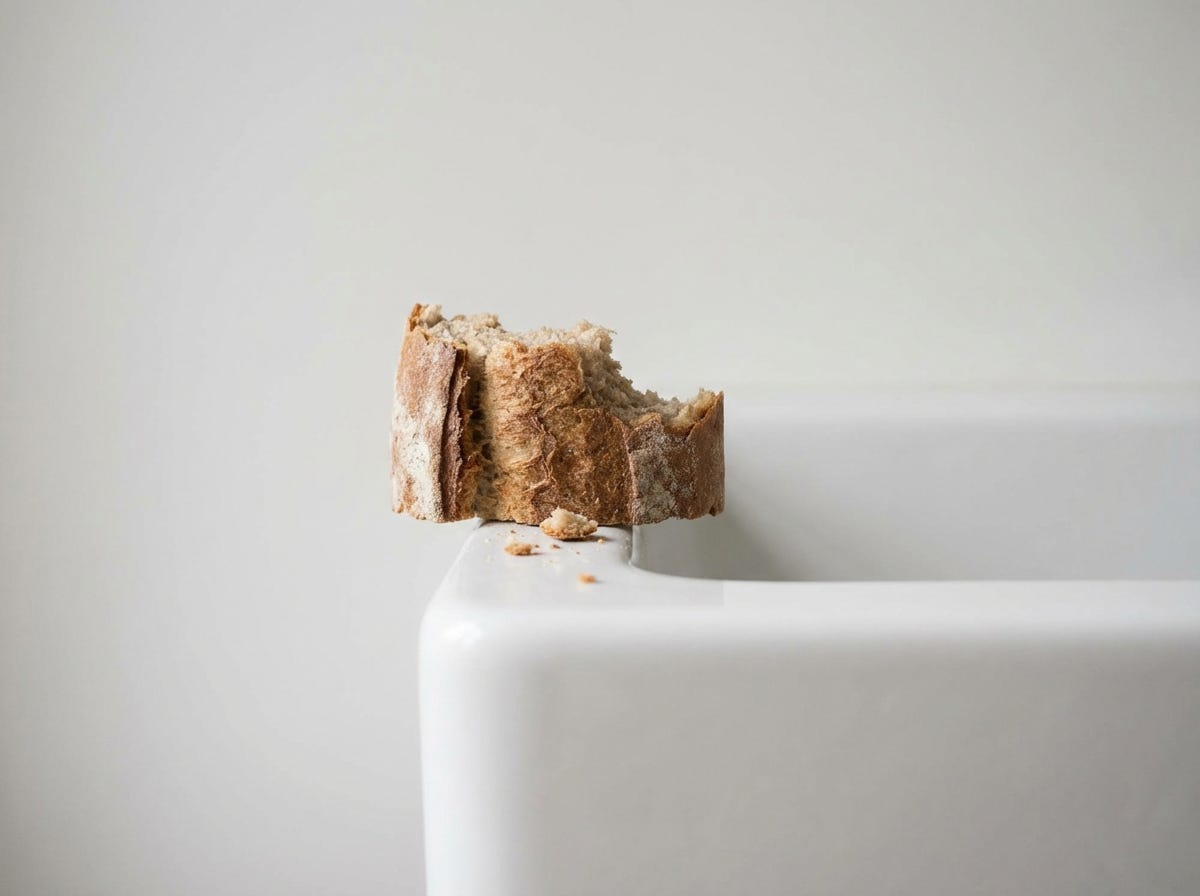
How impulse eating works
It follows a predictable pattern:
The Negotiation
It begins with a lie. You convince yourself that a small amount is harmless.
“Just a bite” is the most dangerous phrase in the kitchen.
The Speed
Impulse eating is frantic. You swallow before you’ve finished chewing. This speed keeps you from noticing what you’re doing until you stop.
The Convenience
Impulse requires zero friction. You rarely binge on food that needs peeling or cooking. You eat what is ready right now.
Why impulse eating happens
Impulse eating serves a function. Your body is trying to change how you feel, and food is the fastest tool available. It usually happens when you are:
Exhausted
Men often push through tiredness, so the exhaustion signs show up late. Your body wants a quick energy hit to keep you awake, so it pushes you toward sugar or carbs. You usually don’t need food; you need sleep.
Drained
You rarely impulse eat in the morning. It happens at night because your self-control is spent. You have made decisions all day, and by 8pm, your guard is down.
In between
Many men don’t slow down instantly, even when the day is done. Going from high-pressure work to a quiet home is difficult. Your brain struggles to switch gears instantly. Food becomes the thing you use to settle down.
Tense
As we saw last week, the jaw holds physical stress. When you mindlessly chew on something hard or crunchy, you are trying to mechanically release that tension. Instead of eating because you need food, you’re eating to get a brief sense of relief.
Common patterns
Impulse needs a clear path to take over. It usually finds a way in through one of these three habits:
The All or Nothing thinking
This is a common issue for us men. We view ourselves as either “disciplined” or “off the rails.” If you eat one unplanned cookie, you tell yourself you have failed. Since the day is “ruined,” you end up eating a lot more than you intended.
The Human Bin
You hate waste. You eat cold fries and half-eaten sandwiches just to clear the table. You are acting as a disposal unit, not a man feeding himself.
Opportunism
You eat simply because the opportunity exists. It happens at offices or parties. You walk past a tray of food and grab it simply because it is available. You didn’t want it until you saw it.
Waking up
The trance breaks the second you stop chewing.
You are left standing in the kitchen with a clear head but a heavy body. You realize you made a bad trade. You got five minutes of distraction, and in exchange, you gave up part of your evening. You feel worse than before you started.
Solutions:
Here are a few rules that make impulse less likely:
Plate and chair
Never eat standing up. Never eat from the package. If it is not worth putting on a plate, it is not worth eating.The short gap
When the urge hits, do nothing for ten seconds. Impulse relies on momentum. If you pause, you break the trance.Add friction
Impulse follows whatever is easiest. It follows the path of least resistance. It grabs what is open and visible. If you have to open a sealed container or reach into a high cupboard, the impulse often dies before you take the bite.The binary question
Don’t ask “what do I want?” That is a trap.
Ask: “Am I hungry or am I restless?” Real hunger is patient; it can wait. Restlessness is urgent; it wants relief now. If you can’t wait ten minutes, it’s usually not hunger.
Q: I have read advice like this before. I know the theory. Why is there still such a huge gap between what I know and what I actually do?
When you reach the evening, your attention drops. You are tired, your mind is slower, and your awareness fades in and out. In those moments, old habits run on their own. You act before you notice what you are doing.
That is why you cannot rely on thinking. You need small physical rules that still work when your mind is low on energy.
Action for the Week
The goal this week is not to be perfect, but to break the trance.
Sit to eat
No exceptions. Even if it is just an apple. If you eat, you sit.
Narrate the action
Break the secrecy. Before you eat something unplanned, say it out loud to yourself: “I am going to eat this chocolate because I feel stressed.” It stops the autopilot.
Don’t bury the evidence
If you do impulse eat, do not hide the wrapper in the bin immediately. Leave it on the counter. Acknowledge it happened. Putting it out of sight keeps the discomfort going. Looking at it helps it settle. Noticing is the first step.