
When tracking daily habits goes too far
Knowing when measurement helps and when it does not

There are two kinds of men:
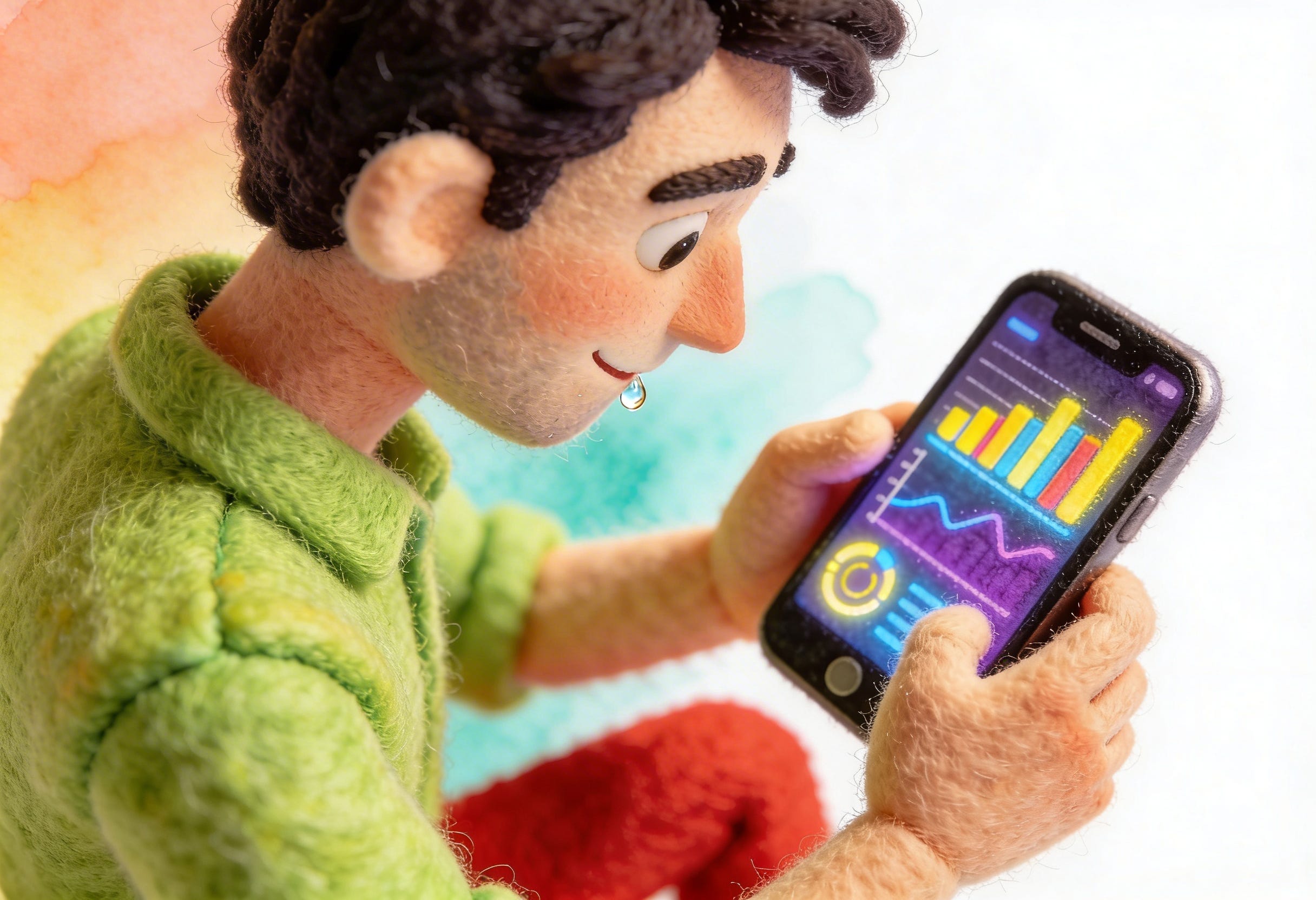
One is focused on tracking everything: calories, steps, heart rate variability, sleep quality, screen time and number of books read. His days turn into numbers and charts. If you ask him how he is feeling right now, he often cannot answer without checking an app first.
The other man moves through his days guided mainly by how things feel. If he feels rested, he assumes he slept well. If his body feels tired, he slows down. If it feels fine, he keeps going. His decisions come from how his body feels, not from numbers.
Most men will recognise themselves leaning toward one of these two approaches.
Both make sense on the surface. Numbers feel reliable. Feelings feel subjective and real. But when one starts to replace the other, things start to break down.
The problem is not bad data or weak intuition. It is when tracking becomes the first reference point. Instead of checking in with yourself, you check a screen.
This has a downside: when tracking becomes the default, you stop paying attention. Tiredness, hunger, restlessness, even satisfaction only count once they show up on a screen.
Because of that, you notice things later than you should have. For example, you realise you are exhausted after you’ve already pushed too far. You ignore pain longer. You keep habits going because the app tells you to, not because they still make sense in your life.
This is how tracking stops helping and starts deciding for you. When used with a clear reason, however, tracking can be very helpful.
When tracking is a good idea
There are a few situations where tracking makes sense.
To spot things you are missing
Some things are hard to judge by feel alone, like sleep, heart health, or how much you eat. Tracking for a short time can make patterns obvious.To see what you actually do
When starting a new habit, most people think they are doing more than they are. For example, it’s hard to judge how far you’ve run without tracking it. Tracking removes guessing and shows the difference between what you plan and what actually happens.To avoid going too far
During training or busy periods, you often feel motivated before your body has fully recovered. Basic data can help you notice when you are pushing too much and slow down in time.To help when signals are unclear
For some people, including those with ADHD, bodily signals like hunger or thirst are easy to miss. In those cases, tracking can provide structure.
Tracking should serve a clear purpose. If you can’t say what you are trying to learn, it is probably time to stop.
In my case, I wanted to lose fat for many years and despite my efforts, I didn’t get very far. When I spoke with my brother in desperation, he suggested that I should temporarily track my calories. The day I started doing it is the day I realised how many calories came from things I barely noticed, like cooking oil or peanut butter! Without that data, I would not have noticed the problem.
What tracking does not give you
Tracking can support habits, but it misses things only you can notice:
Satisfaction and meaning
Tracking can tell you that you did something, not whether it felt right. You can have a “good” day on paper and go to bed feeling off. Satisfaction is part of how we judge whether something worked for us.
Context
Numbers do not know what else is going on. Maybe you had a busy week, guests staying over, stress at work, or all three combined. Or maybe you had an argument with someone you care about. Trackers treat every day the same, even when your life clearly is not.
Early signals
Your body often gives small warnings before things turn into a problem. Tightness, dizziness, loss of focus. When you rely too much on data, you tend to notice these only after they have become a problem.
Learning your own signals
This is something no app can do for you. Knowing that a certain headache means you need water, or that restlessness means you need a walk. This kind of awareness only develops if you pay attention to how you feel.
Numbers can be useful when you are trying to learn something or fix a clear problem. The rest of the time, you rely on your energy, your recovery, and whether something fits your life.
Use tracking to learn. Once you have learnt, let it go.
Action of the week
Pick the option that fits you better.
If you already track a lot
Choose one thing you usually check, like sleep, steps, or calories.
For one week:
Keep doing the behaviour as usual.
Delay checking the numbers until later in the day or the next day.
Notice what you feel in your body when you cannot check the number. Pay attention to things like tiredness, tension, or restlessness.
If you do not track at all
Choose one thing to track for one week, without buying a device.
Here are some options:
Sleep consistency
For one week, write down what time you went to bed and what time you woke up. At the end of the week, look at how much these times vary from day to day. The point is not sleep length, but to track how consistent your schedule actually is.Calories or protein intake:
Look up a rough daily target for yourself. For one week, weigh your food and track what you eat using an app or nutrition website. The goal is to see how close or far you usually are from your ideal target.Sugar intake:
For one week, track how many grams of sugar you eat each day. Use labels or a nutrition app. Look at the daily total at the end of the day. Also notice where most of the sugar came from.
At the end of the week, review what you learnt. If the question is answered, stop tracking. If not, improve how you track it and continue for a limited time.