
Going along, and what it costs you
Why standing apart still feels harder than it should.

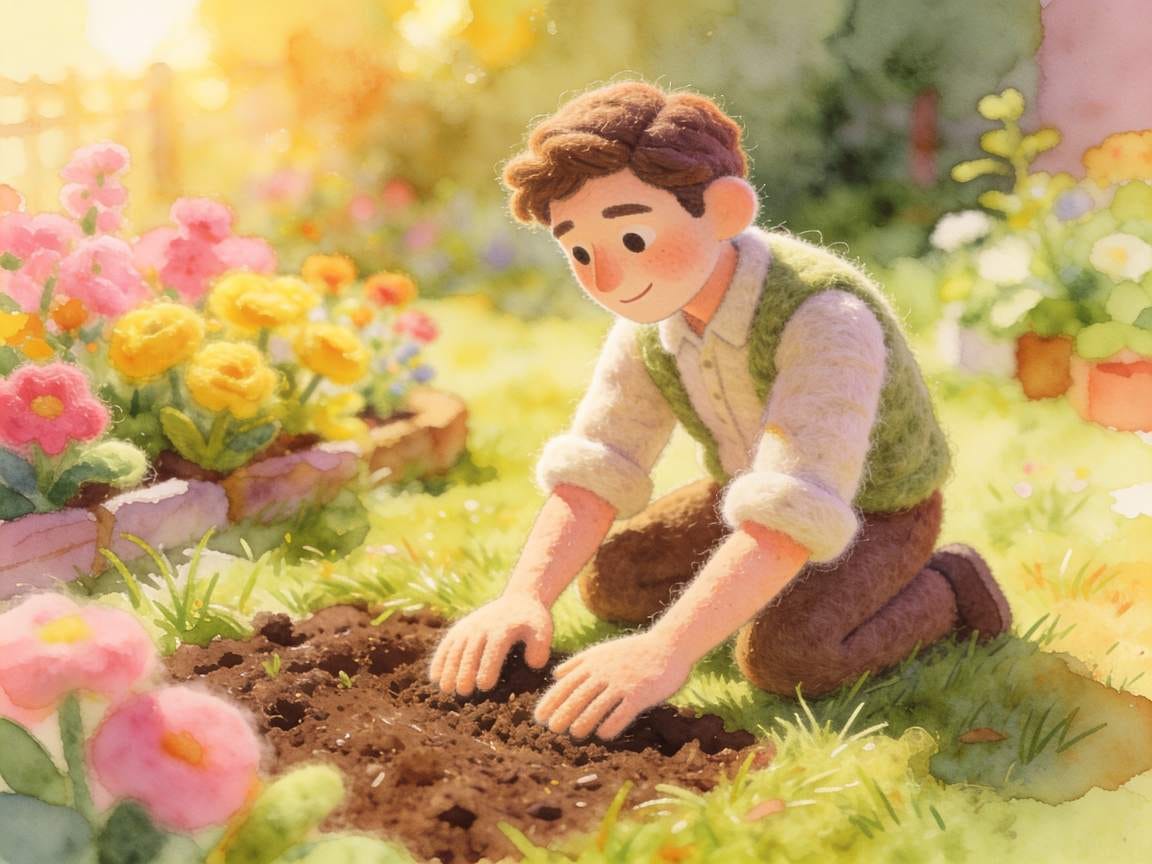
It is Monday morning. Someone at work asks what you did over the weekend. On Saturday you spent two hours in the garden and lost track of time. It was the best part of your week.
You say, “Not much. You?”
It’s the easier answer. You keep the garden to yourself because it feels like a different world. You don’t want to explain why you liked it. You keep your interests quiet so that no one can touch them.
You are a grown man. Your coworkers won’t laugh at you for gardening. They just won’t see it the way you do. They would ask questions you don’t know how to answer. They might make a joke and you’d feel forced to laugh.
The same goes for any habit that seems too soft or too separate from the people around you. The long walk you took alone just for the silence. The movie that stayed with you for days. The meal you spent hours cooking on a quiet evening.
Doing things just to fit in
There’s another side to this. There are things you do because of the people around you, even when you don’t want to.
It’s Friday night. You’ve had a long week. You want to go home, make something to eat, and have a quiet evening. Someone at work suggests drinks. You say yes before you’ve thought about it.
You stay for one drink. Then someone orders another round and puts a drink in front of you. You don’t say no. You stay for a third. You get home at midnight feeling tired and slightly annoyed at yourself.
This happens in smaller ways too. Someone tells a joke that isn’t funny and you laugh. Someone says something at the table you don’t agree with and you nod. You don’t do any of this because you want to. It’s just that going along is easier.
Why you avoid standing apart
The gardening, the films, the drinks on a Friday night are the surface. The real reason you do all of this is that you don’t want to stand apart from the group.
Being the one who stands apart isn’t easy. If you tell people you spent your Saturday in the garden, they might look at you a bit differently. If you say no to the drinks, you’re the one who left early. If you don’t laugh at the joke, you’re the one who didn’t get it. None of these are big things but they add up, and you’ve learned to avoid them without thinking about it.
So you keep the parts of yourself that don’t fit to one side. You go along with the things you don’t want to do. You shape yourself, in small ways, around what the group expects. Most of the time you don’t notice you’re doing it.
How it started
You learned this early. At a young age, you worked out which boys got picked on and which ones didn’t. You saw what got someone called soft: the boy who cried, the boy who liked the wrong music, the boy who cared too much about school, the boy whose interests didn’t match the group. So you adjusted.
You hid the parts of yourself that would have made you a target, laughed at the jokes the loud boys made, and learned which subjects to be good at and which ones to play down.
You learned how to dress, how to walk, and how to talk so that you fit in. And it worked. You weren’t picked on, or you were picked on less, and you got accepted as one of the group.
You’re a grown man now. The boys at school are not in the room and your colleagues don’t care if you garden. The threat is gone, but the lesson stayed. The part of you that learned to hide as a boy is still doing the job, and it doesn’t know the threat is gone.
The real price of being accepted
From the outside, your life looks full of people. But the people around you know a version of you. They know your job, your hobbies, what you drink, and the kind of jokes you make. They don’t know what you think about getting older. They don’t know what scares you, what you’re proud of, or what you’d do with your life if you could start again. They don’t know the questions you sit with on your own at night.
You can spend years like this and not notice. The company is real and you laugh and have a good time. but when something hard happens, you find there isn’t anyone to call. Your friends only know the part of you that fits in.
And the harder part is that the other men at the table are doing the same thing. One of them hasn’t spoken to his father in months and doesn’t know how to fix it. One of them is worried about something at work and hasn’t told anyone. One of them would rather be at home reading. You’re all sitting there performing for a group that doesn’t actually exist, because no one in it is being themselves.
This is the cost of fitting in. The version they accepted is the one who keeps his head down. The real you stays on his own.
Start paying attention
You can’t change any of this until you can see it. For the next few weeks, pay attention.
When someone asks what you did at the weekend, notice what you leave out. When someone suggests drinks, notice what your mouth says before your mind catches up. When someone tells a joke that isn’t funny, notice yourself laughing. When someone says something you don’t agree with, notice the moment you nod.
Don’t try to do anything different yet. That comes later, and it comes on its own. For now, just watch. See how often you go along with the room without thinking about it. The point is to notice what you’ve been doing on autopilot for years.